
Tired of Thick, Clumpy Paint? How to Master the PBN “Flow Method”
Hey there, fellow painters! Miles here from CustomPBN.
If you’ve ever unboxed a brand-new custom paint-by-numbers kit, eagerly grabbed your brush, and immediately felt like the paint was dragging or leaving heavy brush strokes on the canvas… let me reassure you: you are not alone, and your paint isn’t ruined.
Acrylic paint is inherently thick. Especially with darker pigments (like deep blues, purples, and blacks), the formula can sometimes feel a bit tacky right out of the gate.
Today, I’m going to share a simple technique that completely changed how I paint, and it’s a total game-changer for getting those razor-sharp lines and buttery-smooth coverage. It’s called The Flow Method.
Let’s walk through exactly how to do it using the setup we use in our studio.
Step 1: Add a Drop of Flow Medium
When paint gets a little heavy, the gut reaction is usually to grab a cup of water. While water works in a pinch, it can actually break down the acrylic binders if you use too much, making your paint look streaky or translucent.
Instead, we use a dedicated Acrylic Flow Medium (or flow improver). It thins the consistency without compromising the rich color density of your custom kit.
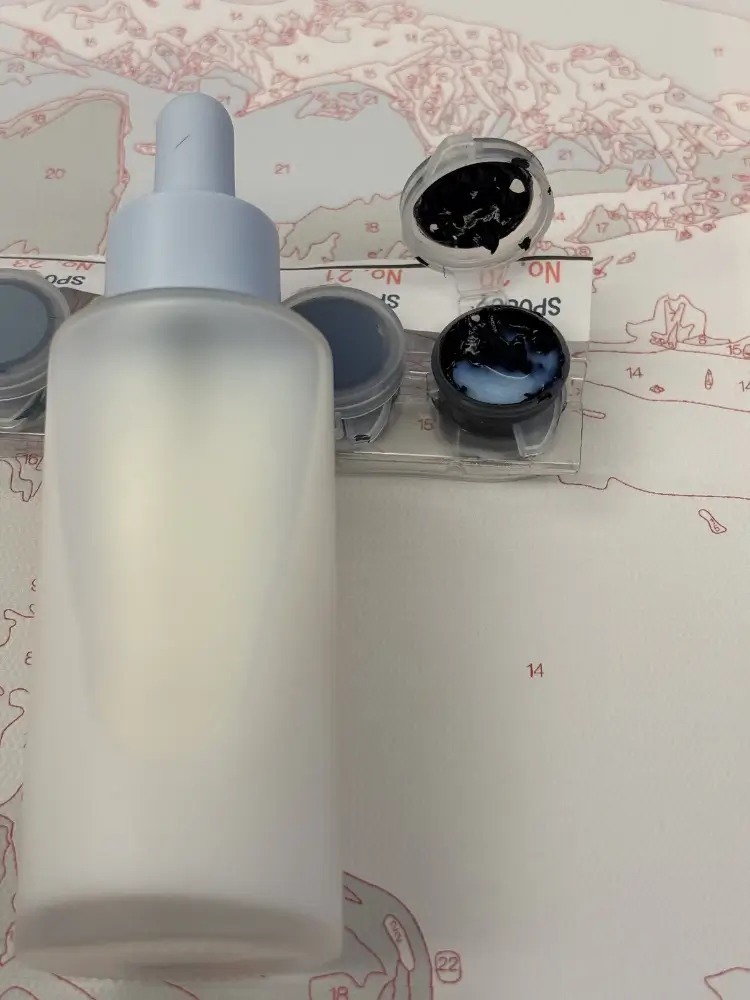
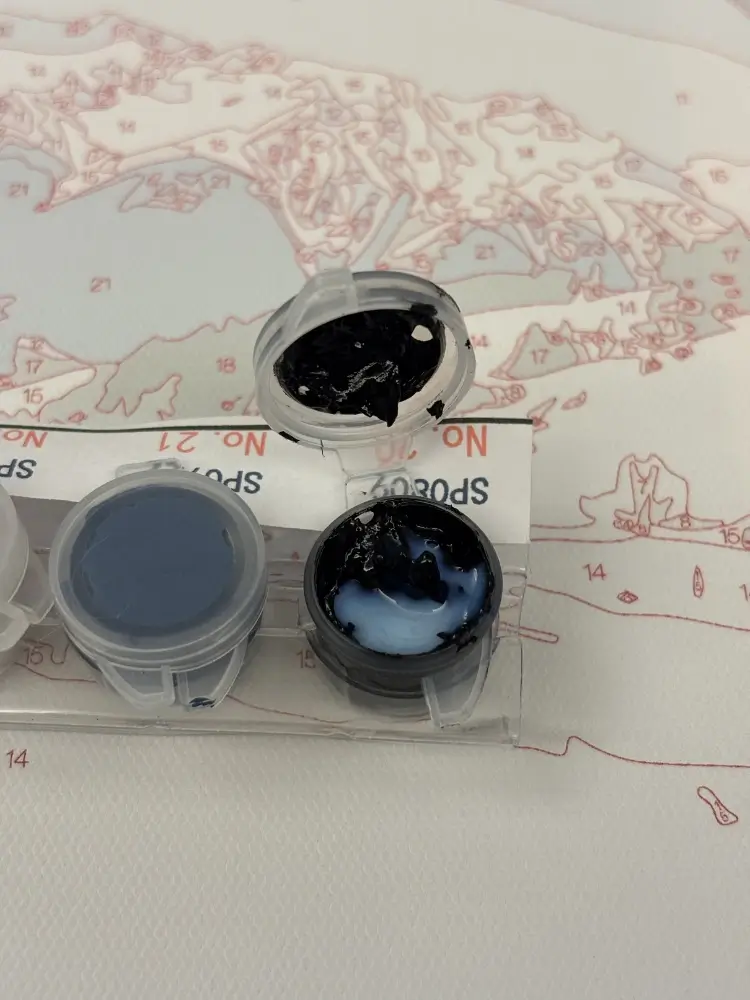
Step 2: Mix It Like a Pro (Ditch the Toothpicks)
We’ve all been there: trying to stir thick acrylic with a flimsy wooden toothpick, only for it to snap or just move the clump around.
If you do a lot of paint-by-numbers, do yourself a huge favor and grab a mini electric paint mixer. It saves your wrists, takes about 5 seconds, and blends the medium into the paint perfectly without creating a million tiny air bubbles.
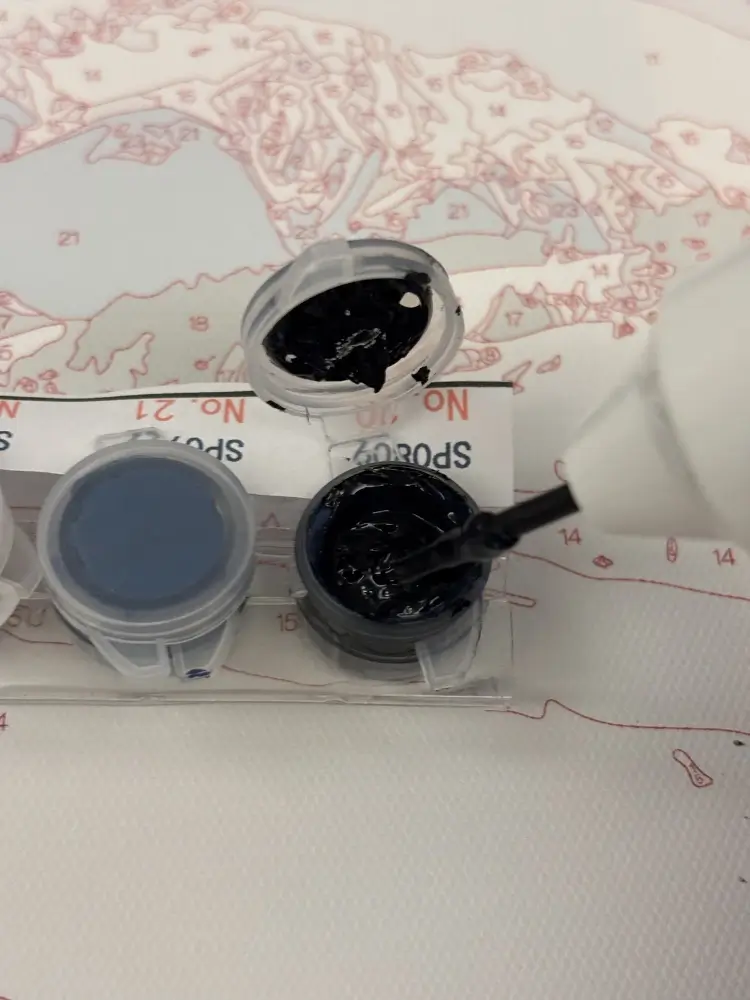
Push the mixer tip right to the bottom of the pot, turn it on for a few quick pulses, and watch that thick gel turn silky smooth.
Step 3: Check the Consistency
How do you know when it’s ready? Take the mixer or your brush out and look at the tip.
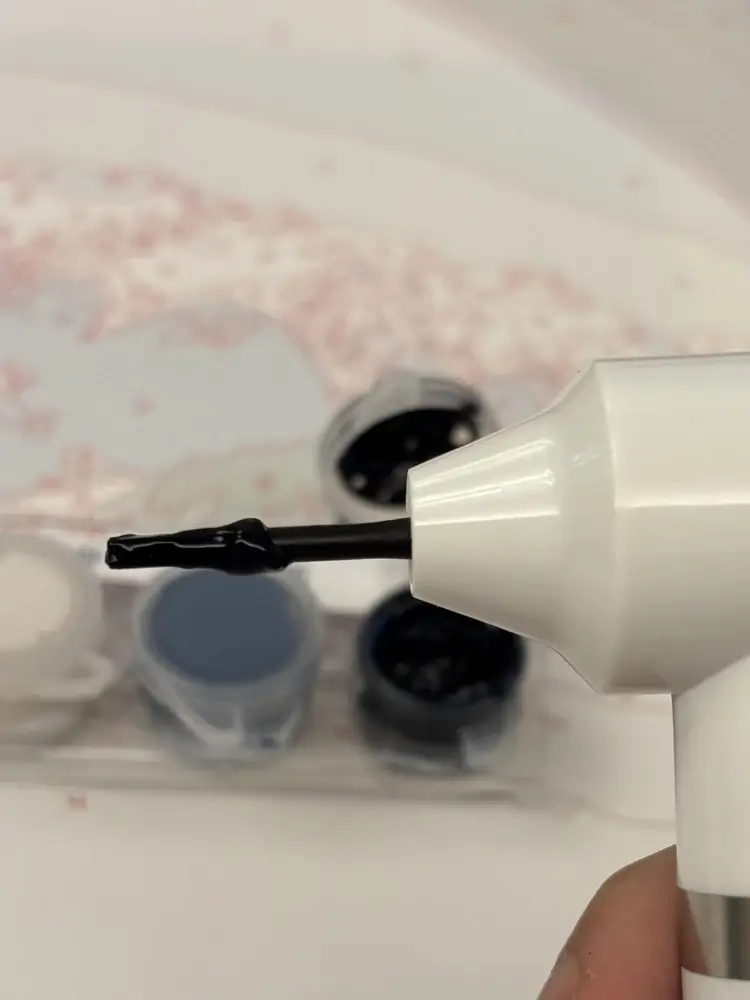
You are looking for a consistency that resembles melted ice cream or warm honey. It should hold its form on the tip for a split second but feel completely fluid. When you glide your brush onto the canvas, it should feel effortless—no pulling, no skipping, just pure, clean lines.
💡 Quick Pro-Tips for the Best Results:
- Don’t thin all your pots at once: Only use the flow method on the specific colors you are currently working on. Acrylics love to dry out, so keep the other pots sealed tight until you need them.
- Wipe your mixer immediately: Acrylic paint dries fast. Keep a damp paper towel next to you so you can wipe down the metal tip of your electric mixer right after spinning it.
- Test on a scrap corner: If you’re worried you added too much medium, test a small stroke on the edge of your canvas border first.
Regarding this “Flow Method” drawing technique, we also found a relevant thread on Reddit that you might want to check out:
Wrap Up
The Flow Method is honestly the quickest way to upgrade your custom piece from a “hobby project” to something that genuinely looks like a professional canvas painting. It removes the frustration of dry paint and lets you just zone out and enjoy the process.
Have you tried using a flow medium yet, or are you still team water? Drop a comment below and let me know how your current canvas is coming along!
Happy painting,